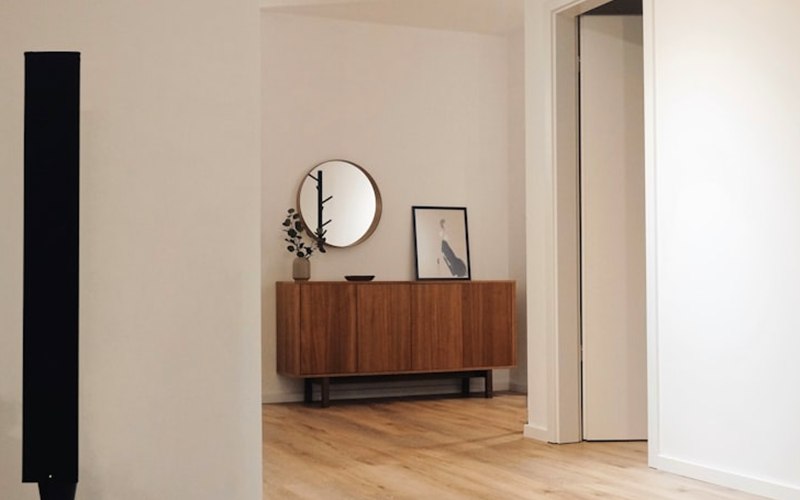
Flooring is one of the most visible features in any home, shaping how every room looks and feels, and it's also a big-ticket purchase, with whole-house jobs running from $3,000 to $30,000 or more depending on the material and square footage. The good news is that the toughest, best-looking floors aren't always the most expensive ones. Daily General breaks down each option by price and durability so you can get years of wear without paying premium money where you don't need to.
The Materials, Side by Side
Solid Hardwood
Solid hardwood is the classic benchmark, with oak, maple, hickory, and walnut leading the species. Because it can be sanded and refinished several times across a 50- to 100-year life, it's the rare floor you may never have to fully replace, which softens the high upfront price over the long haul. The catch is that it hates moisture, ruling it out of basements, bathrooms, and damp spots. Budget $6 to $15 per square foot for the wood plus $3 to $8 to install.
Engineered Hardwood
Engineered hardwood puts a real wood veneer over a plywood or HDF core. That layered build is more stable than solid wood and copes with humidity, so it can go over concrete and into basements where solid hardwood can't. Depending on the veneer thickness, you can refinish it one to three times. Materials run $5 to $14 per square foot, and the click-lock systems many products use cut installation costs, a real saving if you lay it yourself.
Luxury Vinyl Plank (LVP)
LVP is the smart saver's favorite and the fastest-growing category for good reason. It's fully waterproof, extremely durable, comfortable underfoot, and comes in strikingly realistic wood and stone looks for a fraction of the price of the real thing. The rigid SPC (stone polymer composite) core resists dents, scratches, and temperature swings, and it works in every room, basements and baths included. Most of it floats over the subfloor with click-lock planks, making it one of the easiest and cheapest floors to install yourself. Materials run $3 to $8 per square foot.
Laminate
Laminate is the budget champion. A printed image layer over an HDF core, sealed under a clear wear coat, mimics wood or stone for less than either hardwood or LVP. Modern laminate resists scratches well, which suits homes with pets. The trade-off is that traditional laminate isn't waterproof; water-resistant versions exist but still trail LVP. Materials cost just $1.50 to $5 per square foot, the lowest of any option here.
Tile (Ceramic and Porcelain)
For wet rooms, tile is unbeatable. Porcelain is denser and more water-resistant than ceramic and can even go outdoors. Tile comes in nearly endless colors, patterns, and sizes, including wood-look planks that give a hardwood appearance with waterproof toughness. It's hard and cold without radiant heat, and it really wants a pro, which adds to the cost. Materials run $2 to $15 per square foot, plus $5 to $12 to install.
Carpet
Carpet brings warmth, quiet, and softness no hard surface can match, and it's cheap to buy, which makes it a favorite for bedrooms and bonus rooms. Stain-resistant lines have improved, but carpet still traps allergens and is harder to keep clean, so skip it in kitchens, baths, and basements. Materials and padding run $2 to $8 per square foot, plus $1 to $3 to install.
Price Per Square Foot (Materials Only)
- Laminate: $1.50-$5.00
- Carpet: $2.00-$8.00
- Ceramic Tile: $2.00-$10.00
- LVP: $3.00-$8.00
- Engineered Hardwood: $5.00-$14.00
- Solid Hardwood: $6.00-$15.00
- Porcelain Tile: $3.00-$15.00
A pro typically adds $2 to $10 per square foot depending on the material and subfloor. Across a 1,500 sq ft home, you're looking at roughly $5,000 (laminate) up to $35,000 or more (solid hardwood throughout), a spread wide enough that material choice alone can save you tens of thousands.
The Best Value Floor for Each Room
No single material wins everywhere, and matching the floor to the room is how you avoid paying to replace one that fails:
- Kitchen: LVP, porcelain tile, or engineered hardwood. With spills guaranteed, waterproof or water-resistant pays for itself.
- Bathroom: Porcelain tile or LVP, both of which laugh off standing water. Avoid hardwood and laminate here.
- Living Room: Hardwood, engineered hardwood, or LVP. This is the showcase room, but LVP delivers the look for far less.
- Bedrooms: Budget-friendly carpet for softness, or hardwood and LVP dressed up with area rugs.
- Basement: LVP or engineered hardwood as a floating floor, since both handle the moisture and temperature swings below grade.
- Entryway/Mudroom: Porcelain tile or LVP. These busy, damp-prone spots demand tough, waterproof materials that won't need early replacing.
DIY vs. Hiring Out (and What You Save)
Installing it yourself is where the biggest savings hide, but only some floors are realistic weekend projects.
Smart DIY Projects
- LVP (click-lock): The easiest floor to lay yourself, with no glue or nails. The floating planks snap together over most subfloors, and many homeowners finish a room in a day, pocketing the entire labor charge.
- Laminate: Click-lock installation much like LVP, well within reach for anyone comfortable measuring and using a saw.
- Engineered hardwood (floating): Click-lock boards install a lot like LVP, though they're less forgiving on an uneven subfloor.
Leave These to the Pros
- Tile: It needs mortar, grout, precise cuts, and a dead-level subfloor; a botched job means cracks, lippage, and leaks that cost more to fix than you saved.
- Solid hardwood (nail-down): It calls for special tools, careful acclimation, and skill at transitions and odd rooms.
- Carpet: Proper stretching needs a power stretcher and seaming iron most homeowners don't own or know how to use.
Upkeep and Longevity (the Long-Term Cost)
The cheapest floor over time is the one that lasts and is easy to maintain, so match the material to how your household actually lives:
- Hardwood: Sweep often, damp-mop occasionally, refinish every 7 to 10 years, and keep water away. Refinishing instead of replacing is what makes the upfront cost worthwhile.
- LVP: Sweep and mop freely; practically bulletproof in normal use. You can't refinish it, but swapping a single damaged plank is cheap and easy.
- Tile: Nearly indestructible. Grout lines need occasional sealing and can stain if neglected, and cracked tiles swap out one at a time.
- Laminate: Simple to sweep and clean, just keep standing water away. It can't be refinished, and mid-floor plank repairs are fiddly.
- Carpet: Vacuum twice a week and deep-clean yearly. Expect 8 to 15 years before replacement, depending on quality and traffic.
The smartest flooring isn't the priciest or the trendiest. It's the one that fits how your household lives, how much upkeep you'll do, and what your budget can handle, so you buy it once and aren't paying to replace it in a few years.
Trends and Resale Value
The market currently favors wide planks, light-to-medium wood tones, and matte finishes across hard surfaces. The gray floors of the 2010s are fading in favor of warm naturals and white oaks, with herringbone and chevron layouts gaining ground in both hardwood and LVP.
On returns, hardwood reliably leads at 70 to 80 percent of its cost recovered, and buyers increasingly value LVP, especially in mid-priced homes. Carpet in main living areas can actually lower value, since most buyers plan to tear it out. The money-smart move is hardwood or LVP in the main spaces and budget carpet saved for bedrooms.