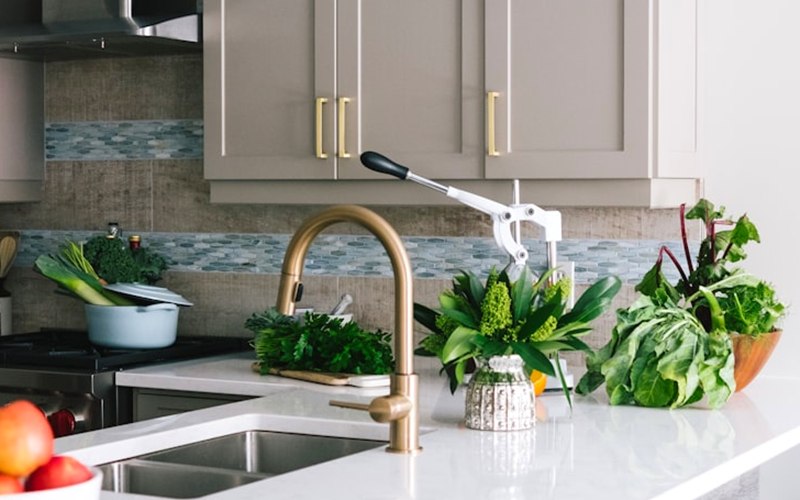
A kitchen makeover has a reputation for emptying bank accounts, but it doesn't have to. With a clear plan and a few smart trade-offs, you can land a kitchen you love and keep thousands in your pocket. The room where everyone gathers and every meal happens is worth doing right, yet "doing it right" and "spending the most" are not the same thing. This guide from Daily General walks you through the choices that quietly run up the bill and shows you the budget-friendly swaps that deliver nearly the same result for a lot less.
Set a Budget First, So Costs Can't Run Away
Before you bookmark a single inspiration photo, decide what you can comfortably spend and how far the work will stretch. Nailing this down early is the single best way to keep the project from ballooning. Costs vary enormously with the scope:
- Budget refresh ($5,000-$15,000): Paint, new hardware and lighting, a fresh backsplash, and maybe refaced cabinet fronts. Keeping the existing footprint is where the real savings live.
- Mid-tier remodel ($25,000-$60,000): New cabinets, counters, appliances, flooring, and fixtures, with only minor layout tweaks to avoid pricey plumbing moves.
- Full gut renovation ($60,000-$130,000+): A complete tear-out and redesign with moved walls and relocated plumbing and wiring. The most expensive path by far.
A useful rule of thumb is to cap spending at 5 to 15 percent of your home's value. Staying inside that band protects you from over-investing and gives you the best shot at recovering the money when you sell.
Keep the Layout to Keep the Bill Down
Here's the biggest money lesson in any kitchen project: moving the sink, stove, or fridge means moving plumbing and wiring, and that's where budgets blow up. A good floor plan flows well without relocating anything. The classic "work triangle" keeps the sink, range, and refrigerator roughly 4 to 9 feet apart so cooking takes fewer steps. The most common layouts:
L-Shaped Kitchen
Counters and cabinets run along two walls meeting at a corner. It's an open, flexible setup for small and mid-sized rooms that often works fine with the plumbing right where it is.
U-Shaped Kitchen
Cabinetry wraps three walls into an enclosed cooking zone, delivering the most storage and workspace per dollar, a favorite among people who cook a lot.
Galley Kitchen
Two facing runs of cabinets along a central aisle. It can feel snug, but it's wonderfully efficient and one of the cheapest layouts to build out in smaller homes and apartments.
Island Kitchen
Any of the above with a freestanding center island for extra prep space, storage, and seating. Just remember an island needs at least 42 inches of clearance all around, and adding power or water to one drives the cost up fast.
Know Where the Money Goes
Once you see how a typical budget splits, you can decide where to spend a little more and where to save big:
- Cabinets and hardware (30-35%): The largest line item, and the easiest place to overspend. Stock units ($80-$200/linear ft) cost a fraction of semi-custom ($150-$650/linear ft) or fully bespoke ($500-$1,500/linear ft), and often look just as good.
- Labor and installation (20-25%): The plumbers, electricians, carpenters, and tile setters. Tackling demo or painting yourself can shave real money here.
- Countertops (10-15%): Laminate ($10-$40/sq ft) costs a sliver of quartz ($50-$120/sq ft) or granite ($40-$100/sq ft).
- Appliances (10-15%): Entry-level suites start around $2,000-$4,000, mid-grade runs $5,000-$10,000, and pro-style packages can top $20,000.
- Flooring (5-10%): Luxury vinyl plank, ceramic tile, and hardwood are the usual picks, with vinyl plank the budget champion.
- Lighting, plumbing, and electrical (5-8%): Under-cabinet fixtures, pendants, and well-placed outlets.
Spend Here, Save There
- Worth paying for: Sturdy cabinet boxes you'll use for decades, a reliable faucet, and a smart lighting plan that's a pain to redo later
- Easy money to save: A trendy backsplash (cheap to redo when styles change), top-of-the-line appliances (mid-grade models cook almost identically for thousands less), and decorative pulls and knobs (swap them anytime for a few dollars)
Countertops: Big Looks, Smaller Price Tags
Quartz: An engineered, nonporous surface that resists stains and never needs sealing. It comes in countless colors and patterns, including convincing marble and granite looks. Popular, though rarely the cheapest, so shop remnant slabs for a smaller kitchen to save.
Granite: Natural stone that shrugs off heat, with no two slabs alike. It needs yearly sealing but can be surprisingly affordable if you buy from a fabricator's existing inventory rather than a special order.
Butcher Block: A warm, inexpensive surface that looks great on an island. It needs regular oiling and dents under water and knives, so use it as a budget-friendly accent rather than your whole counter.
Laminate: The smart saver's choice. Modern laminate mimics stone, wood, and concrete for a small fraction of the cost. It won't match stone for heat resistance, but dollar for dollar nothing beats it for a tight budget.
Buying Appliances Without Overpaying
The best value comes from balancing performance and efficiency rather than chasing the priciest model. Shop floor models, open-box deals, and holiday sales to stretch every dollar:
- Refrigerator: Counter-depth units give a built-in look, and French-door styles sell best. Budget: $1,200-$3,500.
- Range/Cooktop: Gas suits traditional cooks, induction is the efficiency winner, and electric keeps it simple and cheap. Budget: $800-$3,000.
- Dishwasher: Look for quiet operation (44dB or under) and a third rack. Budget: $500-$1,500.
- Ventilation: Easy to skip but important for air quality. A range hood should vent outdoors and move at least 300 CFM.
Plan the Timeline to Avoid Costly Delays
- Design and planning (4-8 weeks): Lock the layout, pick finishes, and collect several contractor bids to compare prices
- Ordering materials (4-12 weeks): Custom cabinets and some counters have long lead times, so order early and avoid rush fees
- Demolition (1-2 weeks): Clearing out the old kitchen, a job many homeowners do themselves to save
- Rough-in (1-2 weeks): Plumbing, wiring, and any structural work
- Cabinets and counters (2-3 weeks): Templating and installation
- Finishing touches (2-4 weeks): Backsplash, flooring, paint, trim, and appliance hookup
Most projects run 3 to 6 months start to finish. Setting up a temporary kitchen with a microwave, hot plate, and small fridge costs almost nothing and saves a fortune in takeout while the work drags on.
What You Get Back at Resale
Kitchens are among the top projects for recovering your money, which makes spending wisely doubly important:
- Budget kitchen refresh: 72-80% recovered
- Mid-range remodel: 60-72% recovered
- High-end remodel: 50-60% recovered
Notice that the cheaper refresh actually returns the highest percentage. Pouring money into finishes far beyond what your neighborhood supports is the fastest way to lose it at sale.
The secret to a budget kitchen remodel isn't spending nothing, it's spending deliberately. Plan carefully, gather competing bids, do the easy work yourself, and resist changing course midstream. Get those right and you'll save thousands on a kitchen you enjoy every single day.